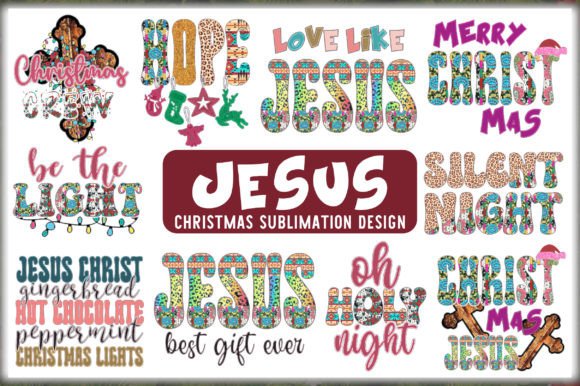
Jesus Christmas Sublimation Bundle: Graphics for Crafts
Evaluating the Spiritual Aesthetic for Seasonal Small Business Branding
As a brand designer working with local artisans and boutique owners, I approach every new graphic design asset with a critical eye toward commercial viability. When reviewing the Jesus Christmas Sublimation Bundle for a recent client project—a handmade candle and soap business preparing for their holiday market season—my first impression was one of reverent warmth. This is not merely festive clipart; it carries a distinct mood that suggests tradition, faith, and intentional craftsmanship. For small business branding, particularly within the handmade business sector, this asset communicates a specific brand personality that is both nostalgic and spiritually grounded.
The visual tone leans heavily into rustic elegance rather than modern minimalism. It feels organic and sincere, making it an ideal candidate for businesses where the product story involves faith-based values or traditional holiday sentiments. In my evaluation, this bundle avoids the plastic, mass-produced aesthetic often found in generic seasonal graphics. Instead, it offers a texture and weight that aligns beautifully with kraft paper packaging, linen labels, and natural product photography. For a local business aiming to connect emotionally with customers during the holidays, this asset provides an immediate sense of comfort and shared values.
Strategic Applications in Packaging Design and Product Labels
In practical application, the Jesus Christmas Sublimation Bundle serves as more than just decoration; it functions as a strategic element of visual hierarchy. During the design phase for our candle line, we utilized the high-resolution PNG design files to create a cohesive product label system. Because the file is provided at 300 dpi with a transparent background, it integrated seamlessly into our packaging design without requiring extensive cleanup or color correction. This technical quality is non-negotiable for professional branding, as pixelated edges can instantly diminish perceived value on a retail shelf.
We found this graphic design asset most effective when used as a secondary brand mark rather than a primary logo. While it is too illustrative to serve as standalone logo design for a scalable corporate identity, it works exceptionally well as a supporting element. We placed it on the back of product packaging to reinforce the holiday theme without cluttering the front-facing ingredient list. This balance is crucial for maintaining clarity while enhancing shelf appeal. For food businesses or bakeries, this same approach could apply to menu headers or seasonal pastry boxes, where the illustration sets the mood but allows typography to remain legible.
Beyond physical products, this bundle proved valuable for printable design elements. We adapted the graphics for thank-you cards and package inserts, creating a consistent unboxing experience that extends the brand identity beyond the initial purchase. For social media managers, the transparent background allows for easy layering over lifestyle photography, enabling the creation of polished marketing visuals and promotional ads that feel custom-designed rather than templated.
Enhancing Customer Trust Through Professional Visual Presentation
A significant challenge for creative entrepreneurs is achieving a level of polish that builds customer trust. The Jesus Christmas Sublimation Bundle supports this by providing a focal point that anchors seasonal campaigns. When applied correctly, it signals that the business has invested in quality design assets, which subconsciously translates to product quality in the consumer's mind. In our case study, the inclusion of this faith-centered graphic helped differentiate our client’s candles from competitors using generic winter imagery, fostering a stronger emotional connection with their specific target demographic.
This asset also aids in establishing better product recognition across various touchpoints. By repeating the motif across web design banners, email newsletters, and physical hang tags, we created a unified visual language. This consistency is the hallmark of professional branding. For handmade sellers operating on platforms like Etsy or at local craft fairs, such cohesion helps transform a collection of individual items into a recognizable brand. The digital product format ensures that whether the graphic appears on a smartphone screen or a printed sticker, the integrity of the illustration remains intact.
Contextual Limitations and Editorial Design Considerations
Despite its strengths, this asset requires careful placement. As with any detailed illustration, there are contexts where the Jesus Christmas Sublimation Bundle should be used with restraint. It is not suitable for formal corporate branding or luxury minimalist brands where negative space is the primary design feature. In those contexts, the ornate nature of the graphic would compete with the desired sleek aesthetic. Furthermore, designers must avoid placing this asset in legal information areas or dense ingredient lists. The complexity of the illustration can reduce readability if placed behind small text or low-contrast backgrounds.
I also advise against using this asset at extremely small scales. While the 300 dpi resolution allows for resizing, intricate details may become muddy when reduced below two inches in width. On a crowded product label, it risks becoming visual noise rather than a decorative accent. It works best as a hero graphic or a deliberate border element, not as a subtle pattern fill. Additionally, because the subject matter is explicitly religious, it is vital to ensure alignment with your brand voice. Using this asset for a secular or edgy brand would create cognitive dissonance for the customer, potentially damaging brand authenticity.
Technical Workflow Notes for Commercial Design Implementation
Before deploying the Jesus Christmas Sublimation Bundle in a live commercial environment, I recommend a rigorous testing protocol. First, always verify the commercial license. Just because a digital product is available on a creative marketplace does not automatically grant rights for unlimited physical product sales or client work. Confirming licensing protects your business from future liability. Second, test the PNG transparency on actual packaging mockups. Screen colors often differ from print output, especially on textured materials like recycled paper or fabric. What looks vibrant in Canva or Photoshop may require color adjustment once printed via sublimation or direct-to-garment methods.
Typography pairing is another critical consideration. This asset possesses a traditional, somewhat ornate character. In my testing, it paired beautifully with classic serif fonts and elegant script typefaces, reinforcing the heritage feel. However, it clashed with geometric sans-serif or ultra-modern display fonts. If your existing brand identity relies on strict modernism, this asset may require significant stylistic adaptation to fit cohesively. Finally, check the file in black and white. A strong graphic design asset should hold its form without color. If the illustration loses definition when desaturated, it limits your ability to use it for single-color stamping or embossing, which are popular techniques in premium packaging design.
For those utilizing SVG design workflows, note that this specific bundle focuses on high-resolution raster formats. While excellent for sublimation and complex printing, it lacks the infinite scalability of vector art. This means you cannot infinitely enlarge it for large-format signage without potential quality loss. Always calculate your maximum required print size before finalizing your layout. Despite this limitation, for standard product packaging, social media graphics, and editorial design applications, the 300 dpi specification is more than adequate for crisp, professional results.
Ultimately, the Jesus Christmas Sublimation Bundle is a powerful tool for specific niches within the crafts and local business landscape. It bridges the gap between personal sentiment and commercial presentation, allowing handmade sellers to create packaging and promotional materials that resonate deeply with their community. By treating this asset as a strategic component of a broader brand identity system—rather than a standalone decoration—designers and business owners can leverage its emotional weight to drive engagement and sales during the most competitive retail season of the year. The key lies in respectful integration, technical diligence, and a clear understanding of how visual faith elements influence consumer perception in the modern marketplace.